
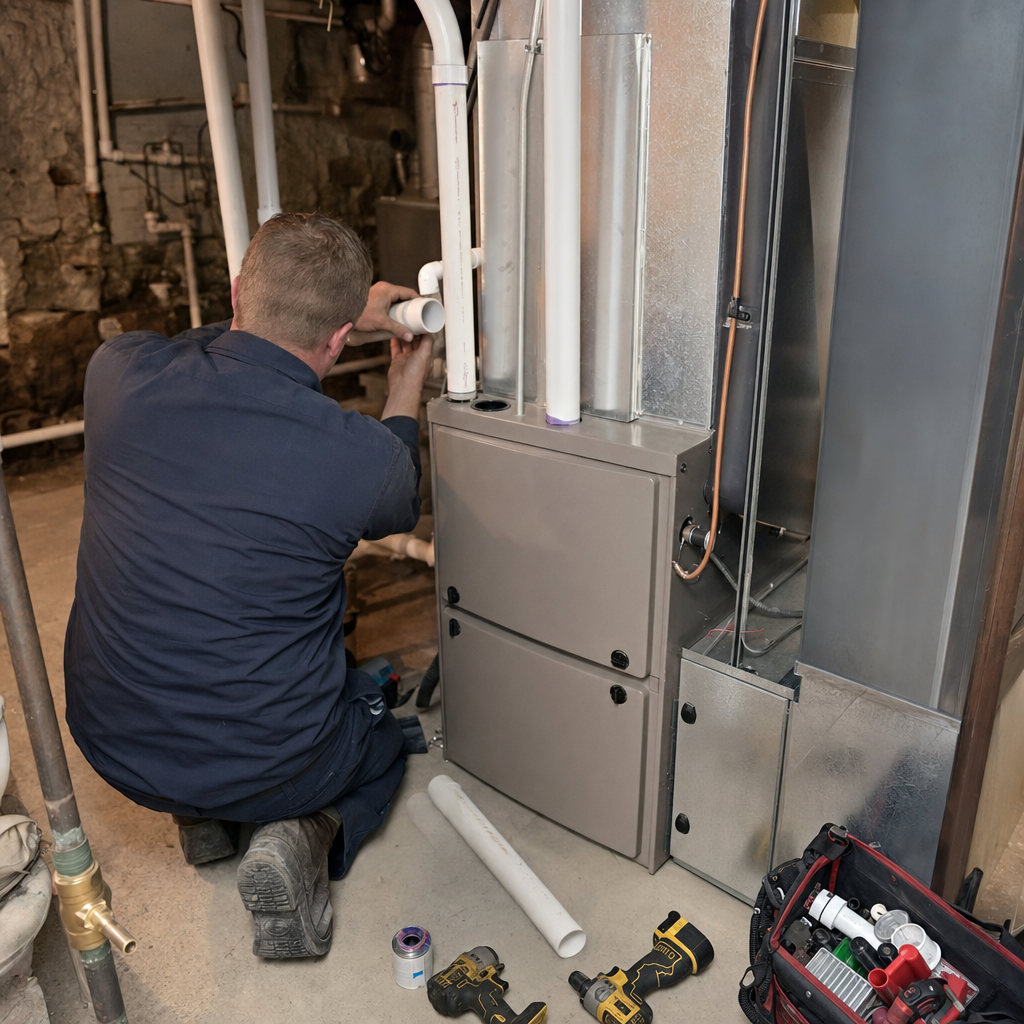
American Standard Ductwork Repair: The Chicago Owner’s Guide
American Standard ductwork repair in Chicago typically runs $180-$450 for most residential jobs, and we stock the common fittings and sealants to complete it same day. We carry OEM and quality aftermarket components for American Standard Silver, Gold, and Platinum series systems, including the specialized collar sizes and damper hardware these units require. Most homeowners notice the problem when rooms stop heating evenly or their winter gas bill jumps $40-$80 without explanation.
We’re Fireside Heating & Air Co., an independent service provider - not affiliated with American Standard - and we’ve been working on their systems in Chicago since the early 1990s. Terry Kowalski, our owner, learned the trade at Olive-Harvey College and has spent 41 years tracking how this city’s freeze-thaw cycles and older masonry construction punish ductwork that was sized for a different era.
Which American Standard Models This Applies To
American Standard organizes its residential line into Silver (single-stage), Gold (two-stage), and Platinum (variable-speed) tiers. The ductwork connections differ across these: Platinum series air handlers use 1-inch insulated flex collars that mate with proprietary damper actuators, while Silver and Gold units typically accept standard 26-gauge galvanized fittings. If you’re checking your unit, the model plate sits on the blower compartment door - look for the “TEM” or “A” prefix, then a four-digit number.
The compatibility gotcha we see most often in Chicago: American Standard’s Gold 80v and Platinum 95 furnaces shipped from 2008-2015 with 20-inch return-air plenums that don’t align with modern 16-inch retrofits without a transition piece. We fabricate those transitions in our shop on the Southwest Side rather than waiting for factory backorders. For OEM versus aftermarket, we use American Standard’s own foil tape and mastic on connections (the warranty stays intact), but source our sheet metal from a local supplier whose 30-gauge galvanized meets the same spec at roughly half the branded markup.
Signs Your American Standard Ductwork Repair Is Failing
- Uneven temperatures room to room. A separated flex duct or failed damper in an American Standard zoning system sends all the conditioned air to one branch. We find this constantly in Chicago bungalows where the original 1950s ductwork was retrofitted to a modern air handler without resizing the trunk lines.
- Hissing or whistling near registers. Small gaps at the plenum connection leak pressurized air into wall cavities. On American Standard variable-speed systems, the blower ramps up to compensate, which overworks the motor and shows up as a $50-$100 monthly spike on Peoples Gas bills.
- Visible dust streaks around ceiling vents. This means your return duct has pulled loose in an attic or crawl space, drawing unfiltered air from inside the wall. In Chicago’s older frame homes, we’ve seen this pull in plaster dust that the standard 1-inch filter was never designed to catch.
- Condensation on ductwork in summer. When the cold-air supply runs through an unconditioned attic without proper R-8 insulation wrap, the metal sweats. American Standard’s higher-SEER units run colder air than the old furnace replaced, so the problem appears after an upgrade that was never paired with ductwork modification.
- The system runs longer but feels weaker. A collapsed internal liner in flex duct chokes airflow without fully blocking it. We measure this with a manometer - static pressure above 0.5 inches on an American Standard Silver series usually points to a restriction somewhere in the trunk.
Replacement Cost & What’s Included
Most American Standard ductwork repairs in Chicago fall between $180 and $450 installed. Simple seal-and-insulate jobs on accessible basement runs sit at the low end. Replacing a collapsed flex duct in a Lakeview attic crawl space, or fabricating a custom plenum transition for a Gold series in a tight mechanical closet, pushes toward the higher figure.
Here’s how we break it down:
- Labor: $120-$280 (one to three hours, depending on access)
- Materials: $60-$170 (sheet metal, flex duct, mastic, foil tape, insulation wrap)
The price we quote is the price you pay. No trip charges, no after-hours fees, no discovery of “additional problems” once we’re in your home. Every repair carries our 90-Day Done Right Promise - in writing, no paperwork to file, no arguing if something isn’t right. We also honor our standing $50 off any repair over $250, and our Senior & Veteran 5% discount applies to ductwork work without exception.
DIY or Call Us?
There’s a short list of things a careful homeowner can check safely. Verify that floor registers aren’t blocked by furniture. Listen for obvious whistling while the blower runs. Peek in the basement and confirm no flex duct has visibly fallen from a trunk connection. Beyond that, ductwork lives in walls, attics, and crawl spaces where disturbed asbestos, electrical wiring, and structural hazards are real concerns in Chicago’s housing stock.
We don’t recommend homeowners cut into sealed plenums or attempt to reroute flex duct. The static pressure balance across an American Standard variable-speed system is calibrated at installation; guesswork here strains the blower motor and voids remaining warranty coverage. Our technicians carry digital manometers, thermal cameras, and the collar sizes specific to your series on the truck. Most jobs finish in a single visit. Call (833) 983-1671 and tell us what it’s doing, and we’ll tell you what it needs.
FAQs
Properly installed galvanized ductwork lasts 25-30 years, but Chicago’s climate accelerates wear. Attic ductwork endures temperature swings from -10°F to 140°F seasonally, and the freeze-thaw cycle eventually cracks mastic seals. We see original 1970s ductwork failing now in neighborhoods like Bridgeport and Archer Heights, while retrofitted flex duct from the 1990s often needs attention after 15-20 years. Call (833) 983-1671 for a free inspection if your home’s in that window.
Many issues are repairable. Separated joints get resealed and supported. Small sections of damaged flex duct get spliced. Full replacement only makes sense when the trunk line is undersized for the current system (common when a 60,000-BTU furnace was swapped for a 100,000-BTU American Standard without duct modification) or when multiple failure points indicate systemic deterioration. We give straight talk about repair versus replace - no upsell if a fix will hold. Call (833) 983-1671 for an honest assessment.
Most residential repairs take 90 minutes to three hours. A simple seal job in an open basement might finish in an hour. Running new flex duct through a finished Lincoln Park attic with limited access can stretch to half a day. We stock American Standard-compatible fittings and 25-foot flex duct rolls on every truck, so we’re not leaving to chase parts. Call (833) 983-1671 to schedule - same day when urgency matters.
Yes. We carry the 20-inch and 24-inch return plenums, insulated flex collars, and damper hardware that American Standard systems require, plus the R-8 insulation wrap that Chicago’s energy code now demands for attic runs. For odd sizes or older transitions, we fabricate same-day in our shop. We’re an independent company - not affiliated with American Standard - but we’ve serviced their equipment long enough to know what fails and what to keep on the shelf. Call (833) 983-1671 to confirm availability for your model.
Written by Terry Kowalski, Owner, Fireside Heating & Air Co. of Chicago at Fireside Heating & Air Co. of Chicago, serving Chicago and nearby areas.